

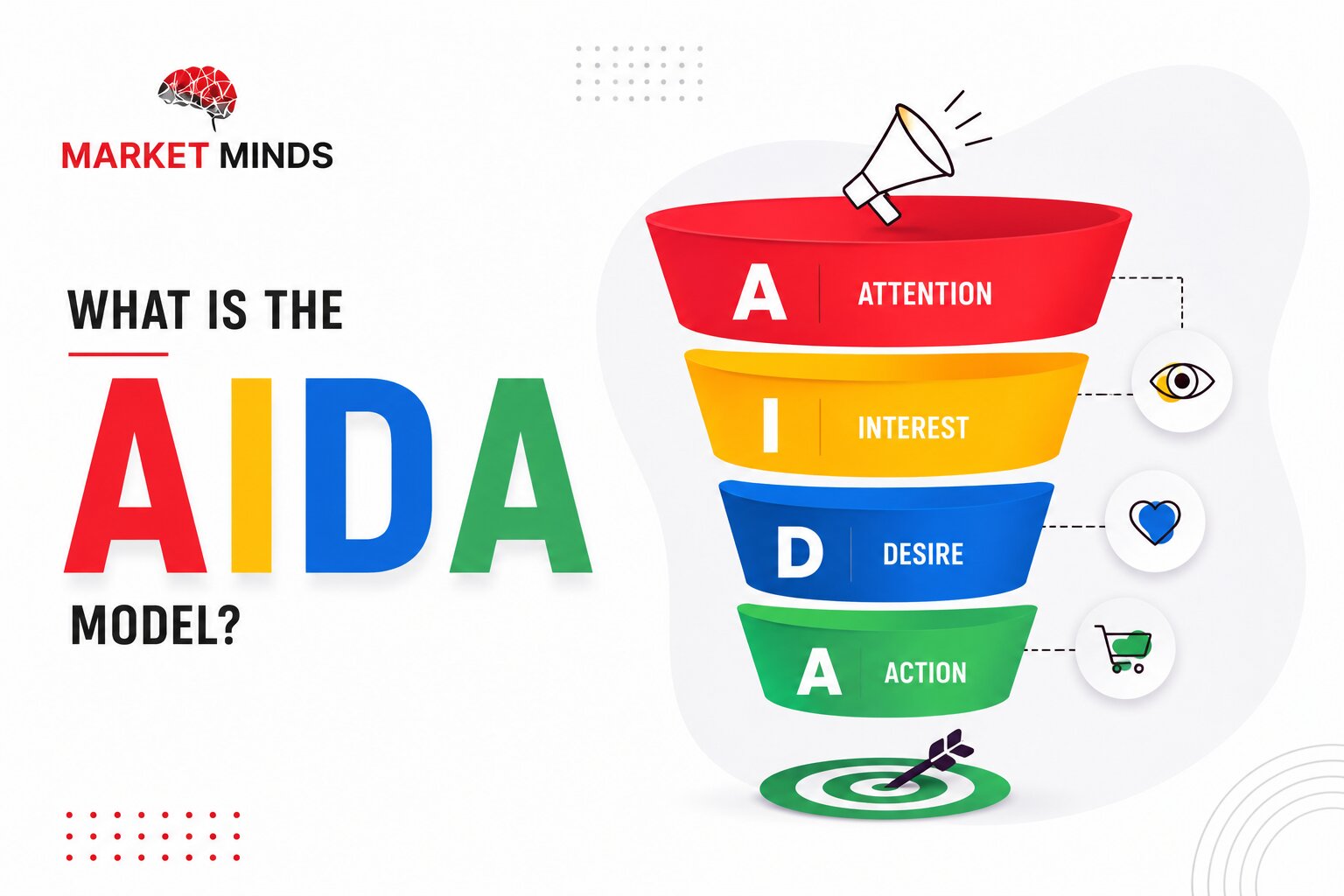
AIDA Model: The Marketing Framework Used for Over 100 Years

AI Summary
The AIDA Model is one of the most influential marketing frameworks used to guide customers from awareness to action. Standing for Attention, Interest, Desire, and Action, it helps marketers understand how people engage with content, advertisements, and sales messages before making a purchase decision. Despite being over a century old, the AIDA framework remains highly relevant in today’s digital marketing landscape, influencing everything from social media campaigns and landing pages to email marketing and advertising strategies. Understanding AIDA can help marketers create more persuasive and effective marketing communications.
Imagine you’re scrolling through Instagram.
A video catches your eye.
You stop scrolling and watch.
The content becomes interesting.
You want to know more.
A few seconds later, you click the link and make a purchase.
What just happened?
You experienced one of the oldest and most powerful marketing frameworks ever created: the AIDA Model.
Despite being developed more than a century ago, the AIDA framework continues to influence advertising, social media, sales funnels, email campaigns, landing pages, and content marketing strategies worldwide.
In this article, we’ll explore what AIDA is, how it works, and why every marketer should understand it.
What is the AIDA Model?
AIDA stands for:
Attention
Interest
Desire
Action
The model describes the four psychological stages a customer goes through before making a purchase decision.
The concept was introduced in 1898 by advertising pioneer E. St. Elmo Lewis and remains one of the most influential marketing frameworks ever developed.
The idea is simple:
Before someone buys from you, they must first notice you, become interested, desire what you’re offering, and finally take action.
Why is the AIDA Model Still Relevant?
Technology has changed dramatically.
Consumer psychology hasn’t.
Whether you’re running:
• Meta Ads
• Google Ads
• Instagram Reels
• LinkedIn Campaigns
• YouTube Videos
• Email Marketing
• Landing Pages
The customer still moves through the same psychological journey.
People buy when attention becomes interest, interest becomes desire, and desire leads to action.
Stage 1: Attention
The first challenge of marketing is simple:
Get noticed.
If people don’t stop scrolling, clicking, watching, or listening, nothing else matters.
Attention is the gateway to every marketing campaign.
Examples of Attention-Grabbing Tactics
• Strong headlines
• Bold visuals
• Emotional hooks
• Shocking statistics
• Curiosity-based content
• Contrarian opinions
Examples
“Most Businesses Waste 50% of Their Marketing Budget”
“Why 90% of Startups Fail Within 5 Years”
“Stop Posting on Instagram Until You Read This”
These statements interrupt patterns and capture attention.
The Biggest Mistake
Many marketers focus on explaining instead of attracting.
If nobody notices your message, even the best offer becomes invisible.
Stage 2: Interest
Getting attention is only the beginning.
Now you must keep the audience engaged.
Interest is created when the audience realizes that your content or offer is relevant to their needs.
How to Build Interest
• Educate
• Entertain
• Solve problems
• Share stories
• Demonstrate expertise
Example
Imagine a headline:
“How Small Businesses Can Double Website Traffic Without Increasing Ad Spend”
The headline grabs attention.
The article then explains practical strategies, creating interest.
The Goal
Make people think:
“This is relevant to me.”
Stage 3: Desire
Interest alone doesn’t generate sales.
People must emotionally want the outcome.
This is where marketing shifts from information to aspiration.
Desire is created when prospects visualize how their life, business, status, health, income, or happiness will improve.
How Marketers Create Desire
• Testimonials
• Case studies
• Before-and-after examples
• Product demonstrations
• Success stories
• Social proof
Example
Instead of saying:
“Our CRM has automation features.”
Say:
“Businesses using this CRM save up to 15 hours every week and close more leads automatically.”
The second statement creates desire because it focuses on benefits rather than features.
Remember
People don’t buy products.
They buy outcomes.
Stage 4: Action
The final step is getting the customer to act.
Many campaigns fail because marketers assume people know what to do next.
Always guide your audience toward the next step.
Common Calls-to-Action
• Buy Now
• Book a Consultation
• Download the Guide
• Start Free Trial
• Subscribe Today
• Request a Demo
• Contact Us
Example
Imagine a fitness coach creating content.
Attention:
“Why Most Weight Loss Plans Fail”
Interest:
Explains common mistakes.
Desire:
Shares client transformation stories.
Action:
“Book Your Free Fitness Assessment Today.”
The customer journey is complete.
AIDA in Modern Digital Marketing
Let’s see how AIDA appears in everyday marketing.
Instagram Reel
Attention:
A strong hook in the first three seconds.
Interest:
Useful tips or insights.
Desire:
Show the result or transformation.
Action:
Follow, comment, or click the link.
Landing Page
Attention:
Compelling headline.
Interest:
Benefits and explanations.
Desire:
Reviews, testimonials, case studies.
Action:
Purchase button or form submission.
Email Marketing
Attention:
Subject line.
Interest:
Valuable content.
Desire:
Offer and benefits.
Action:
Click the link.
YouTube Video
Attention:
Powerful opening.
Interest:
Engaging content.
Desire:
Demonstrated value.
Action:
Subscribe, download, or purchase.
Real-World Example: Apple
Apple’s marketing frequently follows AIDA principles.
Attention:
A visually stunning product launch.
Interest:
Showcase innovative features.
Desire:
Demonstrate how the product improves everyday life.
Action:
Pre-order now.
The framework remains surprisingly consistent across industries.
Common AIDA Mistakes
Trying to Sell Immediately
Many marketers jump straight to action without building interest or desire.
Weak Headlines
Without attention, the rest of the message becomes irrelevant.
Feature-Focused Messaging
Features create interest.
Benefits create desire.
No Clear CTA
If customers don’t know what to do next, many simply leave.
AIDA vs Marketing Funnel
The AIDA model and Marketing Funnel are closely related.
Marketing Funnel:
TOFU → MOFU → BOFU
AIDA:
Attention → Interest → Desire → Action
AIDA explains the psychological journey.
The Marketing Funnel explains the business journey.
Together, they create a complete marketing strategy.
Final Thoughts
More than 100 years after its creation, the AIDA Model remains one of the most practical frameworks in marketing.
Whether you’re writing an advertisement, designing a landing page, creating social media content, sending an email campaign, or launching a product, AIDA provides a simple blueprint for guiding customers toward action.
The next time you see a successful advertisement, ask yourself:
How did it grab my attention?
How did it build interest?
How did it create desire?
What action did it ask me to take?
You’ll often discover that the world’s best marketers are still using the same framework that has worked for more than a century.
Because while platforms change, human psychology rarely does.
Frequently Asked Questions (FAQs)
1. What does AIDA stand for in marketing?
AIDA stands for Attention, Interest, Desire, and Action. It represents the four stages a customer typically goes through before making a purchase decision.
2. Why is the AIDA Model important in marketing?
The AIDA Model helps marketers structure their messaging to attract attention, generate interest, build desire, and encourage action, making campaigns more effective and conversion-focused.
3. Is the AIDA Model still relevant in 2026?
Yes. While marketing channels and technologies have evolved, the psychological principles behind the AIDA Model remain highly relevant and continue to influence modern marketing strategies.
4. Where is the AIDA Model used today?
The AIDA framework is commonly used in advertising, social media marketing, email campaigns, landing pages, content marketing, sales funnels, and product promotions.
5. What is an example of the AIDA Model in action?
A social media advertisement may grab attention with a strong headline, create interest through engaging content, build desire by highlighting benefits, and drive action with a clear call-to-action such as “Buy Now” or “Sign Up Today.”
6. What is the difference between AIDA and a marketing funnel?
AIDA focuses on the psychological stages of customer decision-making, while a marketing funnel describes the broader customer journey from awareness to conversion. The two concepts are often used together.
7. Can small businesses use the AIDA Model?
Absolutely. The AIDA framework is simple, versatile, and effective for businesses of all sizes, making it one of the most widely used marketing models in the world.