

Marketing Funnel Explained: How TOFU, MOFU & BOFU Turn Strangers into Customers

AI Summary
The marketing funnel is a framework that explains how potential customers move from discovering a brand to making a purchase. By understanding the different stages of the funnel, businesses can create more targeted marketing campaigns and improve conversion rates. The three key stages—TOFU (Top of Funnel), MOFU (Middle of Funnel), and BOFU (Bottom of Funnel)—require different content, messaging, and strategies. Mastering the marketing funnel helps marketers generate higher-quality leads, nurture prospects effectively, and drive sustainable business growth.
Many businesses focus all their efforts on generating leads and sales. However, one common mistake marketers make is treating every potential customer the same way.
In reality, customers go through different stages before making a purchase decision. Someone discovering your brand for the first time behaves very differently from someone who is already comparing your product with competitors.
This journey is known as the Marketing Funnel.
Understanding the marketing funnel helps businesses deliver the right message to the right audience at the right time, resulting in higher engagement, better lead quality, and increased conversions.
What is a Marketing Funnel?
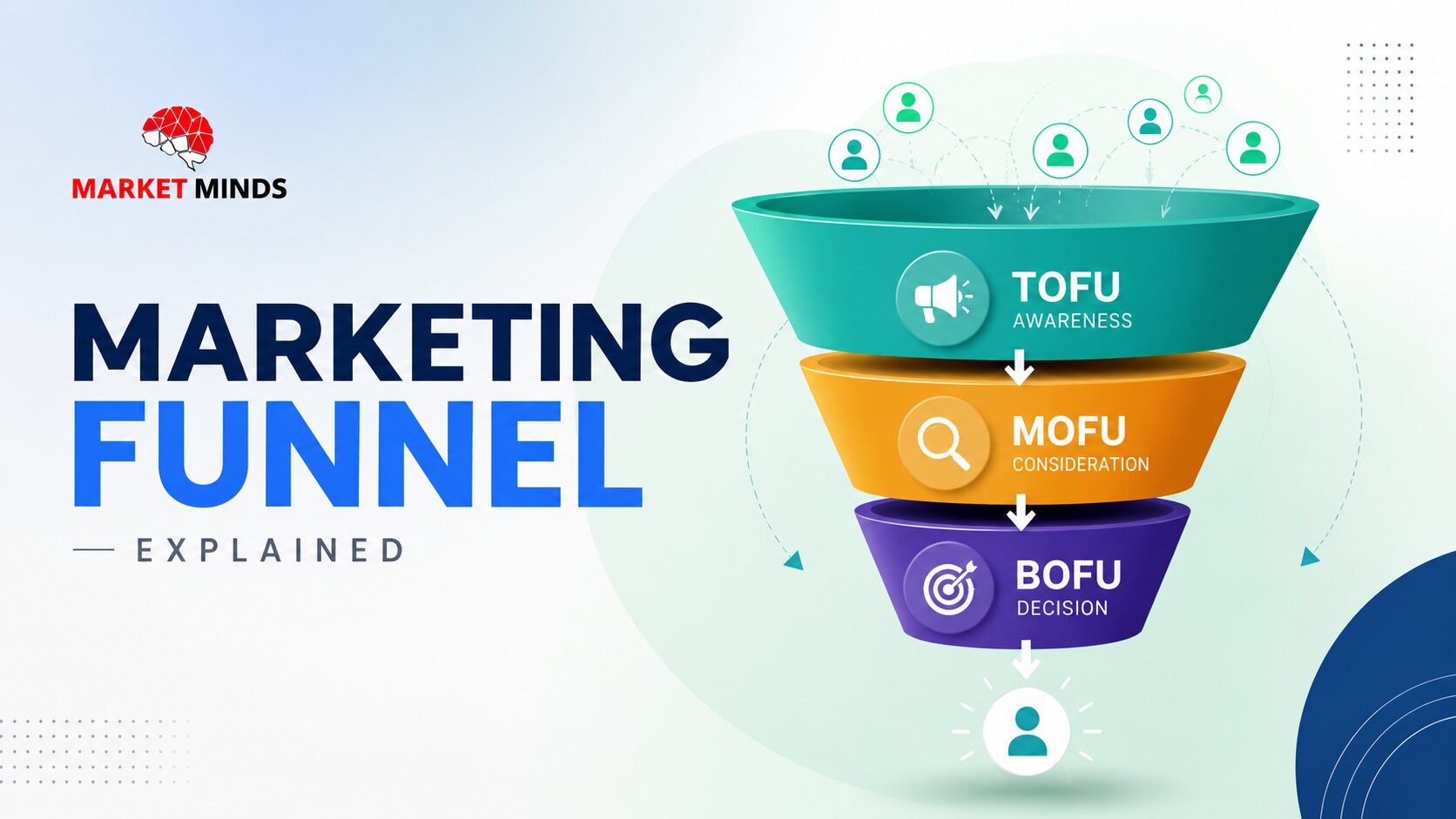
A marketing funnel is a framework that represents the customer journey from discovering a brand to becoming a paying customer.
The funnel is wider at the top because many people may become aware of your brand. As they move through the decision-making process, the audience becomes smaller but more qualified.
The three primary stages of a modern marketing funnel are:
• TOFU (Top of Funnel) – Awareness
• MOFU (Middle of Funnel) – Consideration
• BOFU (Bottom of Funnel) – Conversion
Let’s understand each stage in detail.
TOFU (Top of Funnel): Creating Awareness
At the top of the funnel, people may not even know your brand exists.
The goal at this stage is not to sell. The goal is to educate, entertain, and attract attention.
Customers at this stage are searching for information, answers, trends, and solutions to their problems.
Examples of TOFU Content
• Educational blog posts
• Social media posts
• Infographics
• YouTube videos
• Industry reports
• Podcasts
• SEO content
• Awareness campaigns
Example
Imagine someone searching:
“How can I improve my website traffic?”
They are not looking to buy an SEO service immediately. They simply want information.
A blog titled “10 Proven Ways to Increase Website Traffic in 2026” would be considered TOFU content.
TOFU Objective
Build awareness, trust, and visibility.
MOFU (Middle of Funnel): Building Consideration
Once people know about your brand, they enter the consideration stage.
At this point, they understand their problem and are evaluating possible solutions.
They may compare products, services, providers, pricing, features, and benefits.
This is where marketers start nurturing leads.
Examples of MOFU Content
• Case studies
• Webinars
• Product comparisons
• E-books
• Email sequences
• Industry guides
• Expert interviews
• Success stories
Example
A business owner who previously read your SEO blog may now search:
“Best SEO agencies for small businesses”
or
“SEO agency vs in-house SEO team”
This person is actively evaluating options.
MOFU Objective
Build credibility and demonstrate expertise.
BOFU (Bottom of Funnel): Driving Conversion
At the bottom of the funnel, prospects are ready to make a decision.
They have already identified the solution and are now deciding which company, product, or service to choose.
This is where direct sales-focused content becomes effective.
Examples of BOFU Content
• Free consultations
• Product demos
• Free trials
• Pricing pages
• Customer testimonials
• Limited-time offers
• Sales calls
• Service pages
Example
A prospect searching:
“Best SEO agency in Delhi”
or
“Book an SEO consultation”
is likely in the BOFU stage.
This audience is ready for conversion-focused messaging.
BOFU Objective
Convert prospects into customers.
Real-World Example: A Fitness Brand
Let’s see how a fitness company might use the funnel.
TOFU
Blog: “10 Benefits of Strength Training”
The goal is to attract people interested in fitness.
MOFU
Guide: “Home Workout vs Gym Training: Which Is Better?”
The goal is to help prospects evaluate options.
BOFU
Offer: “Get a Free 7-Day Trial Membership”
The goal is to encourage sign-ups.
The customer moves naturally from awareness to consideration and finally to purchase.
Why the Marketing Funnel Matters
Many businesses fail because they try to sell too early.
Imagine proposing marriage on the first date.
That is exactly what happens when brands push sales before building trust.
The marketing funnel ensures that businesses:
• Understand customer intent
• Deliver relevant content
• Improve lead quality
• Increase conversion rates
• Reduce advertising waste
• Build long-term customer relationships
How Modern Brands Use the Funnel
Today’s successful brands create content for all stages of the funnel.
For example:
TOFU
Instagram Reels, blogs, YouTube videos, SEO articles
MOFU
Case studies, webinars, newsletters, comparison guides
BOFU
Free consultations, product demos, pricing pages, testimonials
The most effective marketing strategies balance all three stages rather than focusing only on sales.
Common Funnel Mistakes
Selling Too Early
Trying to convert cold audiences immediately often results in poor performance.
Ignoring Lead Nurturing
Many businesses generate leads but fail to educate them further.
Creating Only Awareness Content
Traffic alone does not generate revenue if there is no path to conversion.
Not Tracking Funnel Performance
Each stage should have separate KPIs and performance measurements.
Final Thoughts
The marketing funnel remains one of the most important concepts in modern marketing.
Whether you are running Meta Ads, Google Ads, SEO campaigns, social media strategies, or email marketing, understanding TOFU, MOFU, and BOFU helps you deliver the right message at the right stage of the customer journey.
The best marketers do not simply sell products.
They guide prospects through a carefully planned journey from awareness to trust and ultimately to conversion.
Master the funnel, and you will understand the foundation behind almost every successful marketing campaign.
Frequently Asked Questions (FAQs)
1. What is a marketing funnel?
A marketing funnel is a model that represents the customer journey from initial awareness to final purchase, helping businesses understand and optimize each stage of the buying process.
2. What do TOFU, MOFU, and BOFU mean?
TOFU stands for Top of Funnel (Awareness), MOFU stands for Middle of Funnel (Consideration), and BOFU stands for Bottom of Funnel (Decision). Each stage represents a different phase of the customer journey.
3. Why is the marketing funnel important?
The marketing funnel helps businesses deliver the right content and messaging at the right time, resulting in better engagement, stronger lead nurturing, and higher conversion rates.
4. What type of content works best at each funnel stage?
Educational blogs, social media posts, and videos work well for TOFU; case studies, webinars, and comparison guides are effective for MOFU; while product demos, consultations, testimonials, and offers perform best at BOFU.
5. Is the marketing funnel still relevant in 2026?
Yes. While customer journeys have become more complex due to AI, social media, and multiple touchpoints, the marketing funnel remains one of the most effective frameworks for understanding customer behavior and planning marketing strategies.