

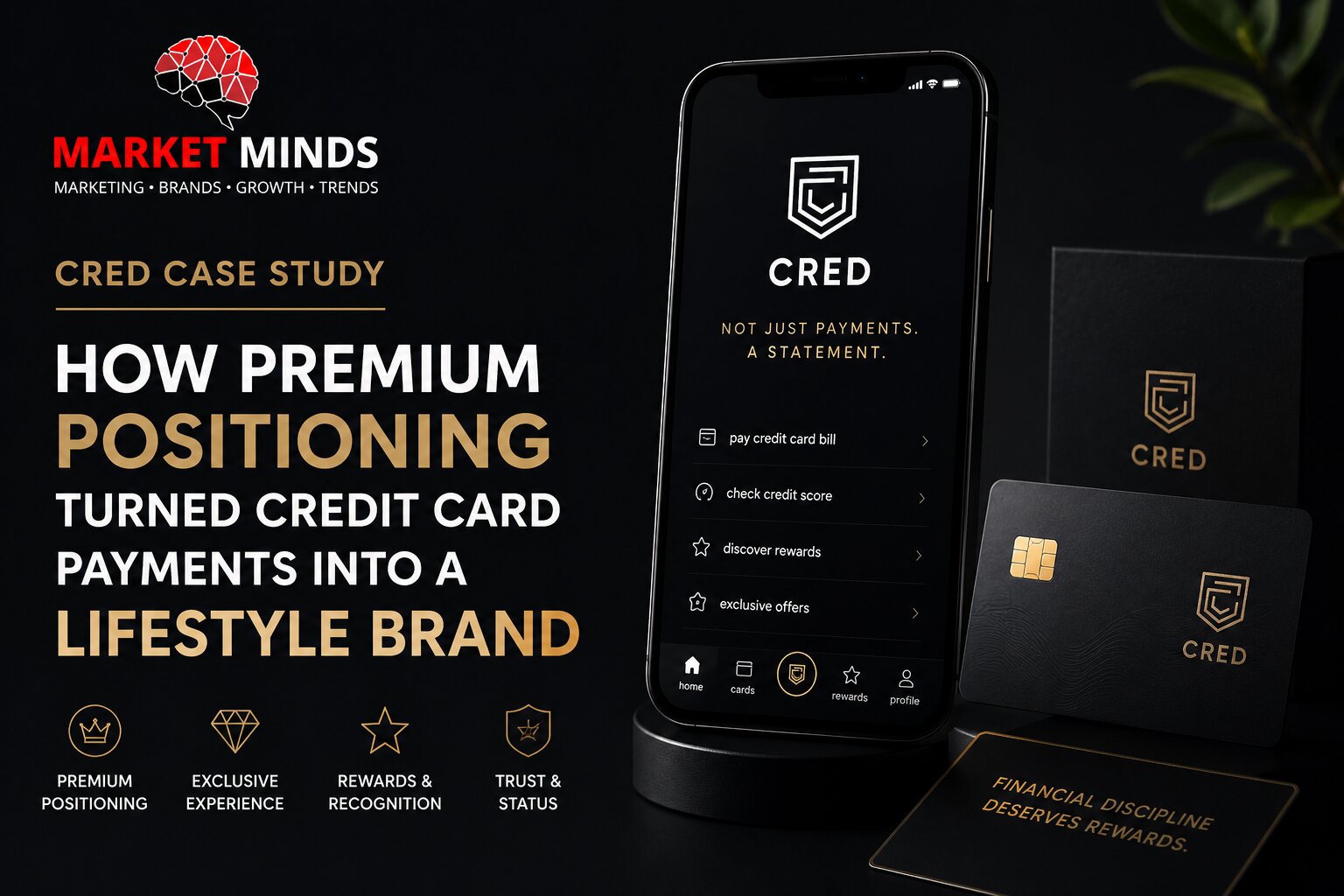
CRED Case Study: How Premium Positioning Turned Credit Card Payments into a Lifestyle Brand

AI Summary
CRED is one of India’s most fascinating marketing case studies because it transformed a routine financial activity—credit card bill payments—into a premium lifestyle experience. By targeting high-credit-score individuals, leveraging celebrity-led advertising, gamification, exclusivity, and exceptional design, CRED created a distinct brand identity in a crowded fintech market. While many fintech companies compete on utility and convenience, CRED competes on aspiration, status, and customer experience. This case study explores how CRED built its premium positioning, acquired users, created brand recall, and navigated the challenges of monetization in 2026.
Introduction
Paying credit card bills is hardly exciting. Most consumers view it as a routine financial task.
Yet somehow, CRED managed to turn it into one of India’s most talked-about fintech brands.
How?
Instead of competing on transactions, CRED focused on perception. Instead of selling convenience, it sold exclusivity. Instead of targeting everyone, it targeted a select audience.
This strategic decision transformed CRED from a bill-payment app into a premium lifestyle brand.
Today, CRED is studied by marketers, startup founders, and MBA students as one of India’s strongest examples of positioning-led growth.
What is CRED?
Founded by Kunal Shah in 2018, CRED is a fintech platform that rewards users for paying their credit card bills on time.
Initially, the concept seemed simple:
Pay your credit card bill.
Earn rewards.
However, the company’s true innovation was not in payments.
It was in branding.
The Problem CRED Identified
India’s fintech market was already crowded.
Consumers had access to:
• Banking apps
• UPI apps
• Wallets
• Payment platforms
Competing on functionality alone would be difficult.
CRED needed a unique positioning strategy.
The company identified a valuable customer segment:
Individuals with strong credit histories and high credit scores.
Rather than targeting everyone, it focused on a smaller, premium audience.
The Power of Premium Positioning
Most brands try to maximize reach.
CRED deliberately limited it.
Eligibility Criteria
Initially, users needed a high credit score to join.
This created:
• Exclusivity
• Curiosity
• Aspiration
Consumers began viewing CRED membership as a signal of financial responsibility.
Why It Worked
People often value what is difficult to access.
By restricting entry, CRED increased perceived value.
Building a Brand Around Aspiration
CRED’s marketing rarely focuses on features.
Instead, it focuses on identity.
Brand Associations
CRED wants users to associate the brand with:
• Sophistication
• Intelligence
• Success
• Exclusivity
This is very different from traditional fintech messaging.
The Lesson
People often buy identity before they buy functionality.
Celebrity Marketing Done Differently
One of CRED’s most recognizable strengths is its advertising.
Instead of conventional fintech advertisements, CRED created memorable campaigns featuring:
• Rahul Dravid
• Neeraj Chopra
• Madhuri Dixit
• Jackie Shroff
• Jim Sarbh
• Various cricket legends
Why the Ads Worked
The campaigns were:
• Unexpected
• Humorous
• Shareable
• Conversation-worthy
Many viewers remembered the advertisement even if they forgot the product features.
Marketing Lesson
Entertainment often creates stronger recall than direct selling.
Gamification and Behavioral Psychology
CRED uses gamification extensively.
Examples include:
• Rewards
• Coins
• Unlockable offers
• Cashback opportunities
Why Gamification Matters
It transforms a routine activity into an engaging experience.
Users receive immediate gratification after completing actions.
This increases engagement and retention.
The Role of Design in Premium Branding
CRED’s design language is often overlooked.
However, it plays a major role in positioning.
Characteristics
• Minimalistic design
• Premium aesthetics
• Smooth user experience
• Luxury-inspired visuals
Impact
The product experience reinforces the brand promise of exclusivity and sophistication.
Creating Community Through Exclusivity
Unlike mass-market fintech platforms, CRED positioned itself as a members-only club.
This created:
• Social proof
• Word-of-mouth marketing
• Community perception
Consumers often wanted access because others perceived it as valuable.
Expanding Beyond Payments
Over time, CRED expanded into:
• Personal finance
• Lending
• Rewards commerce
• Financial products
• Wealth-related services
The goal was to evolve from a utility app into a broader financial ecosystem.
The Monetization Challenge
Despite strong branding success, monetization remains one of the most discussed aspects of CRED’s business model.
Key Challenges
• High customer acquisition costs
• Reward expenses
• Premium customer expectations
The Strategic Question
Can strong brand equity eventually translate into sustainable profitability?
This remains one of the most interesting debates surrounding the company.
Key Marketing Lessons from CRED
1. Positioning Beats Features
Consumers remember how a brand makes them feel more than what it does.
2. Exclusivity Creates Demand
Not every product needs to target everyone.
3. Great Advertising Builds Recall
Memorable campaigns often outperform feature-heavy communication.
4. Design is a Competitive Advantage
Premium experiences strengthen brand perception.
5. Community Drives Growth
People want to belong to exclusive groups and communities.
Why MBA Students Should Study CRED
CRED combines several important marketing concepts:
• Brand Positioning
• Premium Branding
• Behavioral Psychology
• Consumer Perception
• Gamification
• Loyalty Programs
• Customer Experience Design
Few Indian startups demonstrate these concepts as clearly.
Key Takeaways
• CRED transformed a utility product into an aspirational brand.
• Premium positioning became its primary differentiator.
• Celebrity marketing significantly increased brand recall.
• Gamification improved engagement and retention.
• Design and user experience reinforced exclusivity.
• Monetization remains one of the company’s most important strategic challenges.
Conclusion
CRED’s journey demonstrates that successful marketing is often about perception rather than functionality. By combining exclusivity, premium branding, memorable advertising, gamification, and exceptional design, the company built one of India’s most recognizable fintech brands. While questions around long-term monetization remain, CRED continues to offer valuable lessons in positioning, customer psychology, and brand building. For marketers and MBA students, it remains one of the most compelling Indian business case studies of the digital era.
Frequently Asked Questions (FAQs)
1. Why is CRED considered a strong marketing case study?
CRED successfully used premium positioning, exclusivity, and brand-building to differentiate itself in a crowded fintech market.
2. What is CRED’s primary target audience?
CRED primarily targets individuals with strong credit histories and higher credit scores.
3. How does CRED use gamification?
The platform rewards users through coins, offers, rewards, and incentives for financial behavior.
4. Why are CRED advertisements so popular?
Its campaigns focus on entertainment, humor, and unexpected storytelling rather than traditional product promotion.
5. What makes CRED’s positioning unique?
It positions itself as an exclusive membership-based platform rather than a standard fintech utility.
6. What is CRED’s biggest business challenge?
Long-term monetization and profitability remain important strategic challenges.
7. What marketing lessons can businesses learn from CRED?
Businesses can learn about positioning, exclusivity, behavioral psychology, premium branding, and customer experience design.