

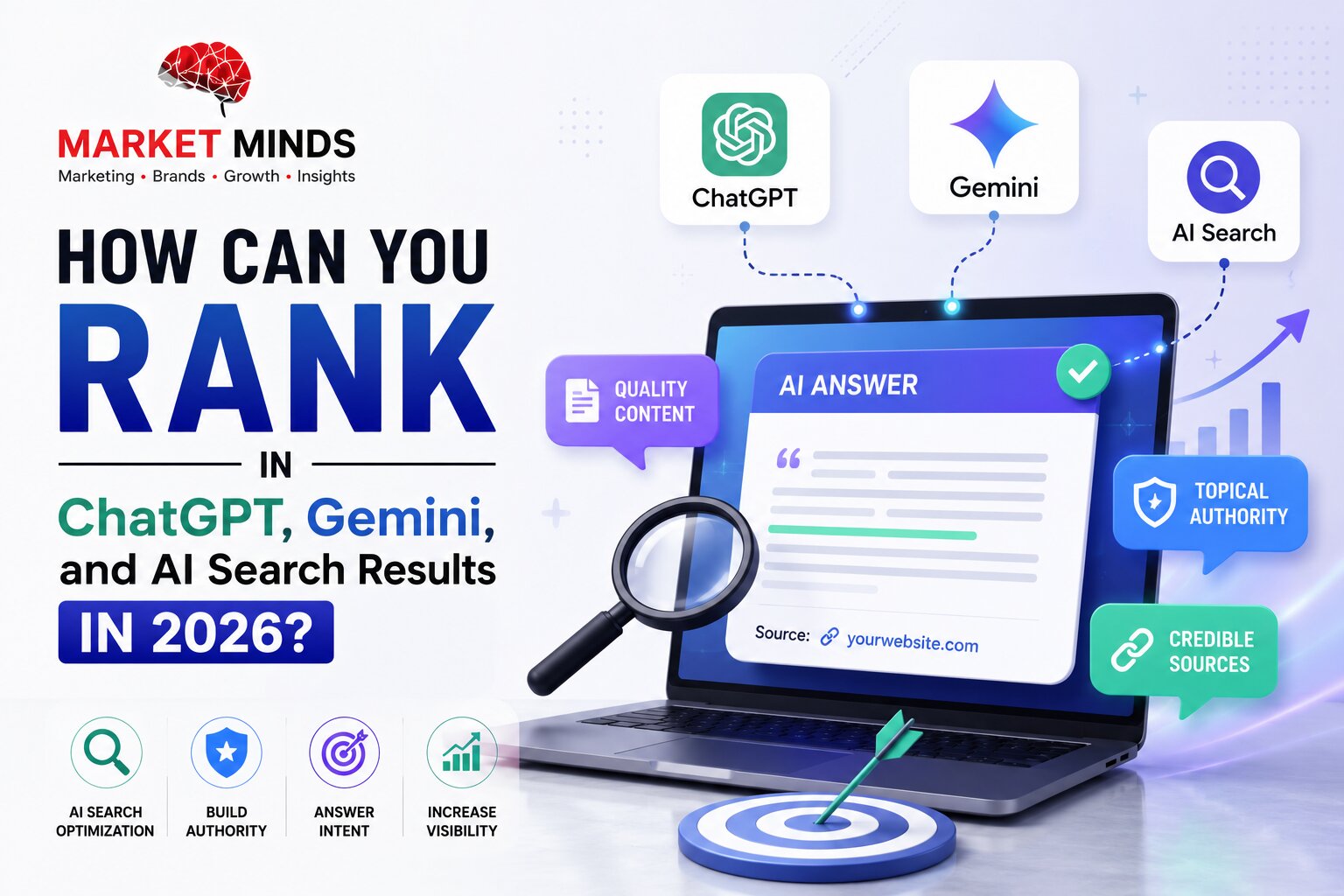
How Can You Rank in ChatGPT, Gemini, and AI Search Results in 2026?

AI Summary
AI-powered search is changing how people discover information online. Instead of browsing multiple websites, users are increasingly relying on ChatGPT, Gemini, Perplexity, and Google’s AI-generated answers. This shift means traditional SEO alone is no longer enough. Businesses and marketers must optimize their content for AI search engines by focusing on authority, structured content, topical expertise, and user intent. This emerging discipline is often referred to as Generative Engine Optimization (GEO). In this article, we’ll explore how AI search works and what you can do to improve your visibility.
Introduction
For over two decades, marketers focused on ranking websites on search engines like Google and Bing. However, the rise of AI-powered search experiences is changing the game.
Today, users are asking questions directly to ChatGPT, Gemini, Claude, Perplexity, and Google’s AI Overviews. Instead of displaying ten blue links, these platforms generate direct answers using information collected from trusted sources across the web.
As a result, marketers are now asking a new question:
How do you rank in AI search results?
The answer lies in understanding how AI systems discover, evaluate, and cite information.
Why AI Search Is Different from Traditional Search
Traditional SEO focuses on ranking web pages.
AI search focuses on generating answers.
Instead of showing a list of websites, AI models analyze multiple sources and create a summarized response.
This means your content may influence an answer even if users never visit your website directly.
The challenge is becoming one of visibility, authority, and trust.
What Is GEO (Generative Engine Optimization)?
Generative Engine Optimization (GEO) refers to the process of optimizing content so AI systems can easily discover, understand, and reference it.
Just as SEO evolved for search engines, GEO is emerging for AI-powered experiences.
The goal is to increase the chances of your content being referenced when AI systems generate answers.
Create Content That Directly Answers Questions
AI systems prefer content that is clear, structured, and directly answers user queries.
Instead of writing vague articles, focus on:
• Frequently Asked Questions
• Step-by-step guides
• Industry explainers
• Comparison articles
• Data-backed insights
Use headings that mirror real search queries.
Example:
Bad:
Digital Marketing Trends
Better:
What Are the Biggest Digital Marketing Trends in 2026?
Build Topical Authority
AI models prefer websites that demonstrate expertise across a topic.
Instead of publishing random articles, build content clusters around specific subjects.
For example, if your niche is marketing:
• Marketing Careers
• Marketing Frameworks
• Branding
• AI in Marketing
• Social Media Marketing
• SEO
The more comprehensive your coverage, the stronger your perceived authority.
Focus on E-E-A-T
Google and AI systems increasingly value:
Experience
Expertise
Authoritativeness
Trustworthiness
To strengthen E-E-A-T:
• Include author information
• Publish original insights
• Reference credible sources
• Keep content updated
• Showcase real-world experience
Use Structured Content
AI models process information more effectively when content is organized.
Use:
• Clear headings
• Bullet points
• Numbered lists
• Tables
• FAQs
• Summaries
Well-structured content improves both readability and AI comprehension.
Create Original Research
One of the most effective ways to become a cited source is by publishing original data.
Examples:
• Industry surveys
• Case studies
• Trend reports
• Performance benchmarks
AI systems often prioritize unique information over recycled content.
Strengthen Brand Presence Across Platforms
AI systems evaluate information from multiple sources.
A strong digital footprint helps.
Build authority through:
• Website content
• LinkedIn posts
• YouTube videos
• Industry publications
• Guest articles
• Podcasts
The stronger your brand presence, the more likely AI systems are to recognize your expertise.
Optimize for Conversational Search
Users interact with AI differently than search engines.
Instead of typing:
“SEO Tips”
They ask:
“How can a small business improve SEO in 2026?”
Create content that naturally answers conversational queries.
The Future of AI Search Optimization
The future of search will likely combine:
Traditional SEO
AI optimization
Brand authority
User experience
Marketers who adapt early will gain a significant advantage as AI-generated search continues to grow.
Conclusion
Ranking in ChatGPT, Gemini, and AI search results requires a shift in mindset. The focus is no longer just about ranking pages but becoming a trusted source of information. By creating authoritative content, building topical expertise, improving structure, and focusing on user intent, businesses can improve their chances of being referenced by AI systems and remain visible in the future of search.
Frequently Asked Questions
What is Generative Engine Optimization (GEO)?
GEO is the process of optimizing content to improve visibility within AI-generated search results and answers.
Does traditional SEO still matter?
Yes. Traditional SEO remains important, but it must now be combined with AI-focused optimization strategies.
Can ChatGPT rank websites?
ChatGPT does not rank websites like Google, but it may reference information from trusted and authoritative sources.
How can I increase my chances of being cited by AI tools?
Focus on expertise, original content, structured information, and topical authority.
Is AI search replacing Google?
Not completely. AI search is currently complementing traditional search experiences.
What is the biggest GEO strategy in 2026?
Building topical authority and publishing high-quality, trustworthy content consistently.