
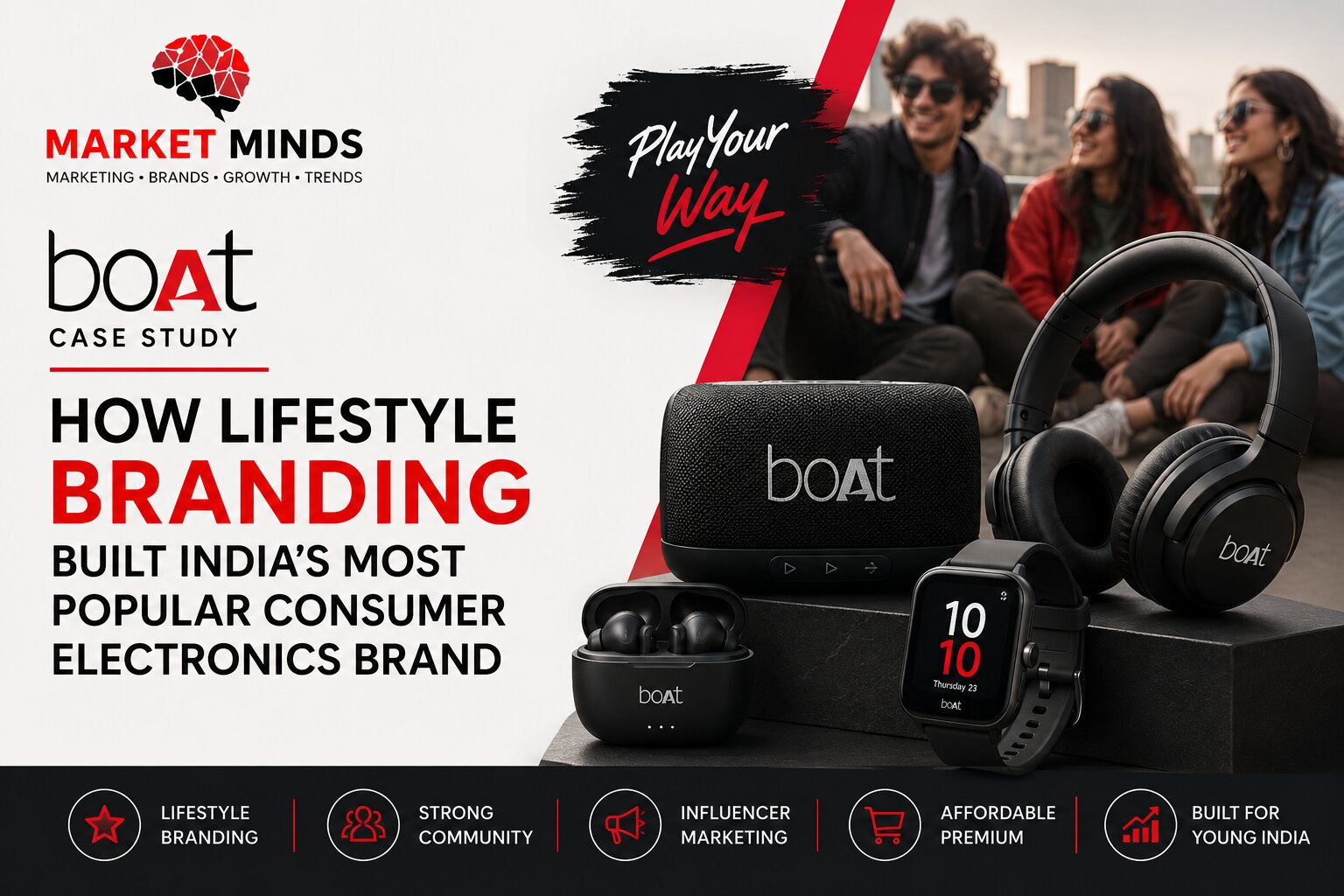
boAt Case Study: How Lifestyle Branding Built India’s Most Popular Consumer Electronics Brand

AI Summary
boAt transformed a highly competitive consumer electronics category by focusing on lifestyle branding rather than technical specifications. Instead of competing directly with global giants on technology, boAt positioned itself as a youthful, stylish, and affordable brand that resonated with India’s Gen-Z and millennial consumers. Through influencer marketing, celebrity partnerships, community building, affordable premium pricing, and strong digital distribution, boAt became one of India’s most recognizable consumer brands. This case study explores how boAt created a lifestyle movement around audio products and wearables while competing against global electronics companies.
Introduction
For years, consumer electronics brands competed primarily on:
• Features
• Specifications
• Battery life
• Sound quality
• Technology
Consumers buying earphones often compared:
• Drivers
• Frequency response
• Technical specifications
Then came boAt.
Instead of selling specifications, boAt sold identity.
The company understood that most consumers were not buying earphones because of audio engineering.
They were buying products that reflected:
• Style
• Personality
• Fitness
• Music
• Youth culture
This insight helped boAt become one of India’s most successful homegrown consumer brands.
What is boAt?
Founded in 2016 by Aman Gupta and Sameer Mehta, boAt started by selling audio accessories and quickly expanded into:
• Earphones
• Headphones
• Speakers
• Smartwatches
• Wearables
• Mobile accessories
Today, it is one of India’s most recognized electronics brands.
The Problem boAt Identified
The market had two extremes:
Premium Global Brands
• Apple
• Sony
• JBL
• Bose
Low-Cost Generic Products
• Unbranded imports
• Local electronics sellers
Consumers wanted products that looked premium but remained affordable.
This gap created an opportunity.
Lifestyle Branding vs Product Branding
One of boAt’s biggest strengths was positioning.
Traditional Electronics Marketing
Most brands focus on:
• Technical features
• Product performance
• Engineering
boAt’s Approach
boAt focused on:
• Music
• Fitness
• Youth culture
• Fashion
• Self-expression
Instead of asking:
“How good is the product?”
Consumers started asking:
“Does this fit my lifestyle?”
The Affordable Premium Strategy
boAt positioned itself as an affordable premium brand.
Why It Worked
Consumers received:
• Modern design
• Trendy aesthetics
• Strong branding
• Competitive pricing
This created a powerful value proposition.
Marketing Lesson
Consumers often seek perceived value rather than the absolute best product.
The Power of Influencer Marketing
boAt aggressively partnered with:
• YouTubers
• Fitness creators
• Lifestyle influencers
• Gamers
• Music creators
Why This Was Effective
Consumers discovered products through people they trusted.
Influencers helped boAt become part of everyday digital culture.
Celebrity Endorsements
boAt amplified its reach through partnerships with:
• Cricketers
• Bollywood celebrities
• Sports personalities
• Entertainment creators
These collaborations increased visibility and strengthened brand recall.
Community Building
One of boAt’s smartest moves was creating a community-driven brand image.
The boAtheads Concept
Customers became more than buyers.
They became part of a tribe.
Why Communities Matter
Communities generate:
• Loyalty
• Advocacy
• Organic word-of-mouth
• Long-term engagement
This helped reduce dependence on paid advertising.
E-commerce First Growth
Unlike traditional electronics companies, boAt embraced digital distribution early.
Key Channels
• Amazon
• Flipkart
• Direct Website
• Online marketplaces
Benefits
• National reach
• Lower distribution costs
• Faster customer acquisition
This allowed rapid scaling.
Social Media Marketing Strategy
boAt became one of India’s most visible brands on social media.
Content Themes
• Music
• Fitness
• Entertainment
• Youth culture
• Product launches
Key Insight
The brand rarely focused solely on products.
Instead, it focused on lifestyle experiences.
Competing Against Global Giants
Perhaps the most remarkable aspect of boAt’s journey is its ability to compete against international brands.
Competitive Advantages
• Local market understanding
• Aggressive pricing
• Faster trend adaptation
• Strong digital marketing
• Cultural relevance
Lesson
Brands do not always need superior technology to win.
Superior positioning can be equally powerful.
Challenges Facing boAt in 2026
Intensifying Competition
The company now competes with:
• Apple
• Samsung
• Noise
• JBL
• Realme
• OnePlus
Market Saturation
The audio accessories market has become increasingly crowded.
Innovation Pressure
Consumers expect continuous product innovation.
Margin Challenges
Price-sensitive markets create profitability pressures.
Key Marketing Lessons from boAt
1. Branding Creates Differentiation
Strong branding can overcome product commoditization.
2. Lifestyle Sells
Consumers often buy identity rather than specifications.
3. Influencers Drive Discovery
Influencer partnerships accelerate awareness and trust.
4. Community Builds Loyalty
Communities create long-term competitive advantages.
5. Local Insights Matter
Understanding local consumers can outperform global scale.
Why MBA Students Should Study boAt
boAt provides valuable lessons in:
• Lifestyle Branding
• Brand Positioning
• Influencer Marketing
• Community Building
• Affordable Premium Strategy
• Consumer Behavior
• E-commerce Growth
Few Indian brands demonstrate modern branding principles as effectively.
Key Takeaways
• boAt built a lifestyle brand rather than simply selling electronics.
• Affordable premium positioning became a major growth driver.
• Influencer marketing accelerated awareness and adoption.
• Community building strengthened loyalty and engagement.
• Strong branding helped boAt compete against global electronics brands.
• The company remains one of India’s strongest examples of modern consumer marketing.
Conclusion
boAt’s success proves that winning in consumer electronics is not solely about technology. By focusing on lifestyle branding, community building, influencer partnerships, and affordable premium positioning, the company created a distinct identity in a highly competitive market. For marketers, entrepreneurs, and MBA students, boAt offers valuable lessons in how branding can transform ordinary products into aspirational consumer experiences.
Frequently Asked Questions (FAQs)
1. Why is boAt considered a successful marketing case study?
boAt successfully combined lifestyle branding, influencer marketing, and affordable premium pricing to build a highly recognizable consumer brand.
2. What is boAt’s target audience?
Its primary audience includes Gen-Z and millennial consumers interested in music, fitness, gaming, and lifestyle products.
3. What is affordable premium positioning?
It refers to offering products that appear premium while remaining accessible to mass-market consumers.
4. How did influencer marketing help boAt grow?
Influencers increased product visibility, trust, and engagement among digitally active consumers.
5. What is the boAtheads community?
boAtheads refers to the brand’s loyal customer community, which strengthens engagement and advocacy.
6. How does boAt compete with global brands?
Through strong branding, competitive pricing, cultural relevance, and local market understanding.
7. What marketing lessons can businesses learn from boAt?
Businesses can learn about lifestyle branding, community building, positioning, and influencer-led growth.